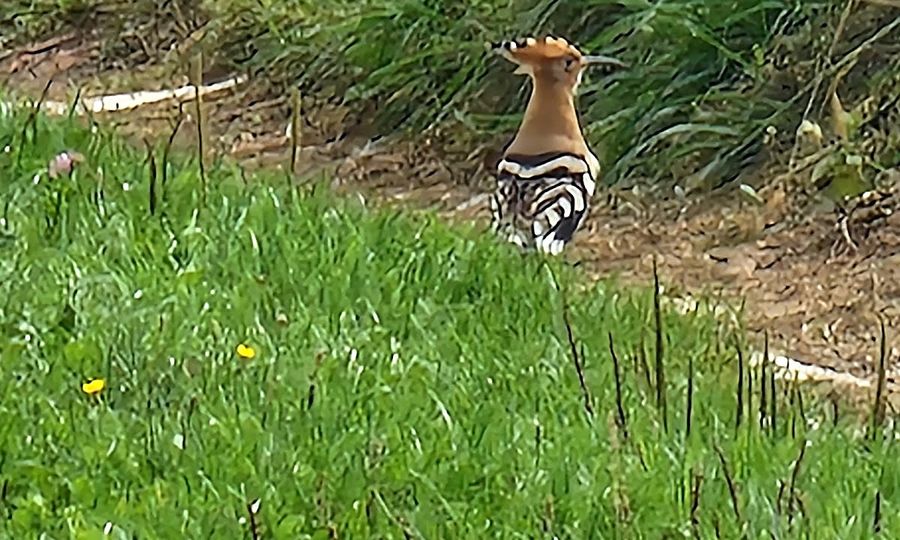
Hoopoe
Upupa epops 📍 nests on the farmIts typical "hoop-hoop-hoop" announces spring. It feeds on the meadow, where beetles live close to the surface.
Meadows, hedgerows, an orchard, a stream and hundreds of young trees. Meet everyone who lives here with us — and see what we do so that there is more life every year.
From the first species survey, carried out as part of the micro-credential Management and Advice on Nature Conservation in Agriculture (Biotechnical Faculty, Ljubljana). The survey continues.
Each part of the valley is home to different plants and animals. Click on a habitat to see what grows there and who you might meet.
Willows, alders, wild cherry, elder, hazel, oak and ash. Hedgerows give shade, hold water and act as living corridors: a bird, a hedgehog or a butterfly can travel along them without crossing open ground.
Who you might meet here: hedgehog roe deer fox red wood ant
Plums, walnuts, wild and sweet cherries, medlar. Old trees with hollows are home to birds and beetles, and the sheep graze beneath the crowns.
Who you might meet here: hoopoe stag beetle scarce swallowtail carpenter bee
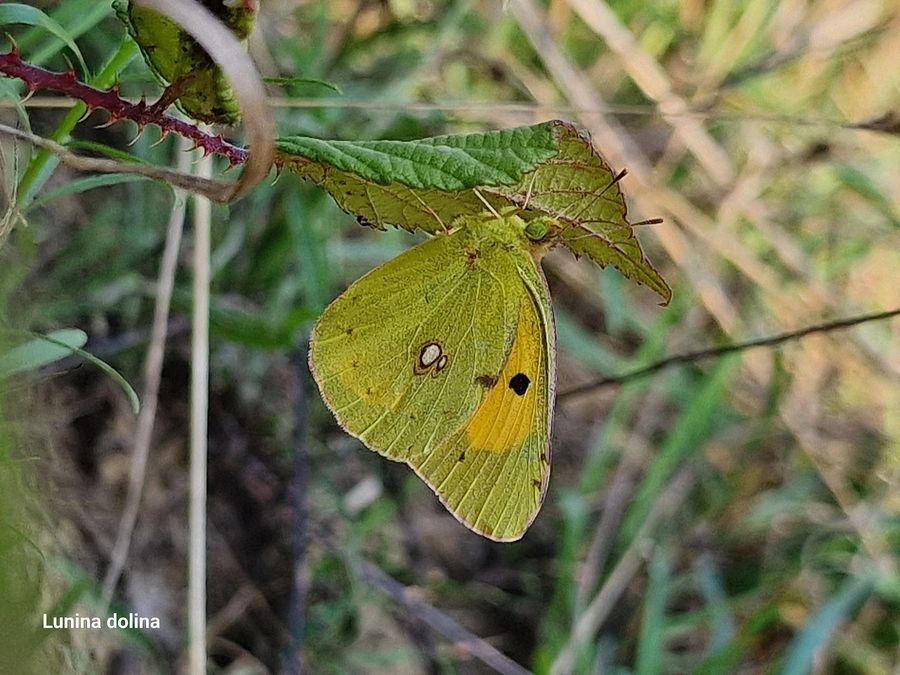
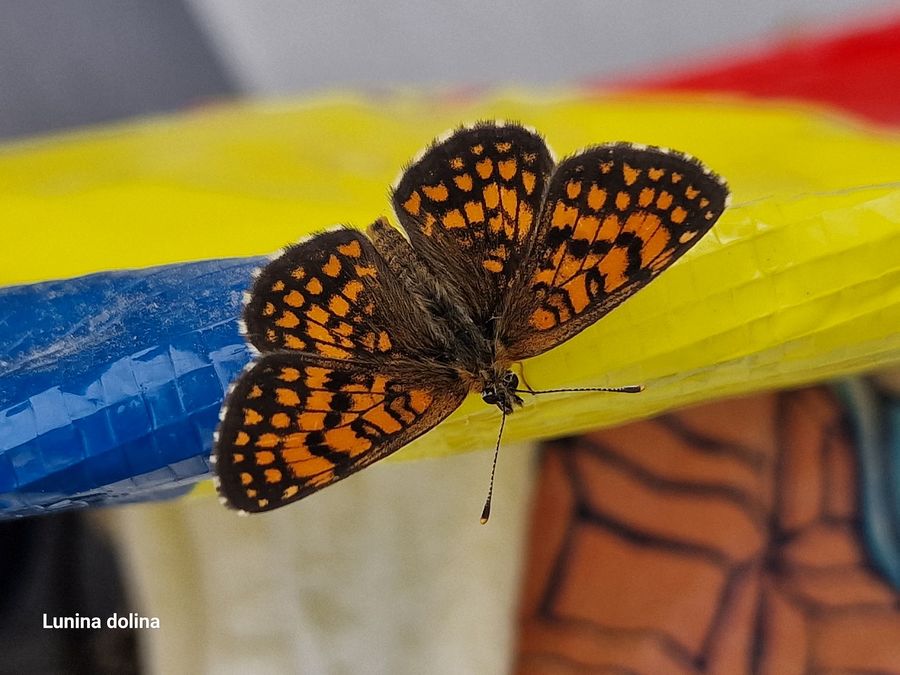
Yarrow, false oat-grass, red clover and daisies. When the sheep leave a pasture, the grass recovers and flowers — food for bees, butterflies and beetles.
Who you might meet here: kestrel brown hare praying mantis barn swallow
This is where water lingers longest. Common valerian grows in abundance, amphibians hide among the moisture-loving grasses, and after mowing the white stork likes to drop by.
Who you might meet here: white stork common toad roe deer
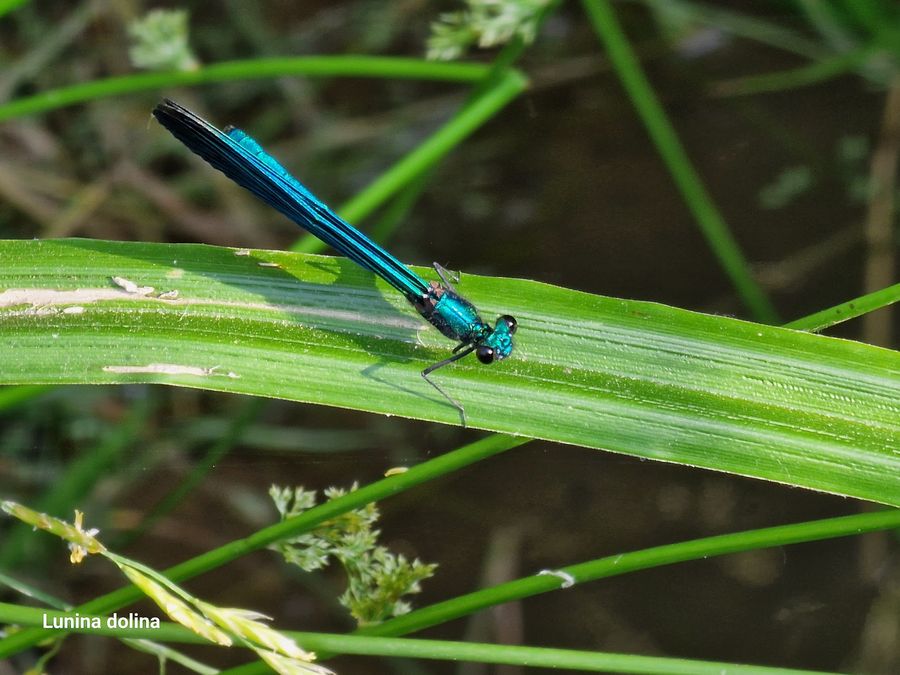
Rushes, reeds, willows, black alder and bulrush. Amphibians and dragonflies live by the spring, the stream and the small pond. A second pond is in preparation.
Who you might meet here: fire salamander common toad dragonflies
Some we see every day, others we only hear or discover by their tracks. They are all here because the valley gives them food, shelter and peace.
Its typical "hoop-hoop-hoop" announces spring. It feeds on the meadow, where beetles live close to the surface.
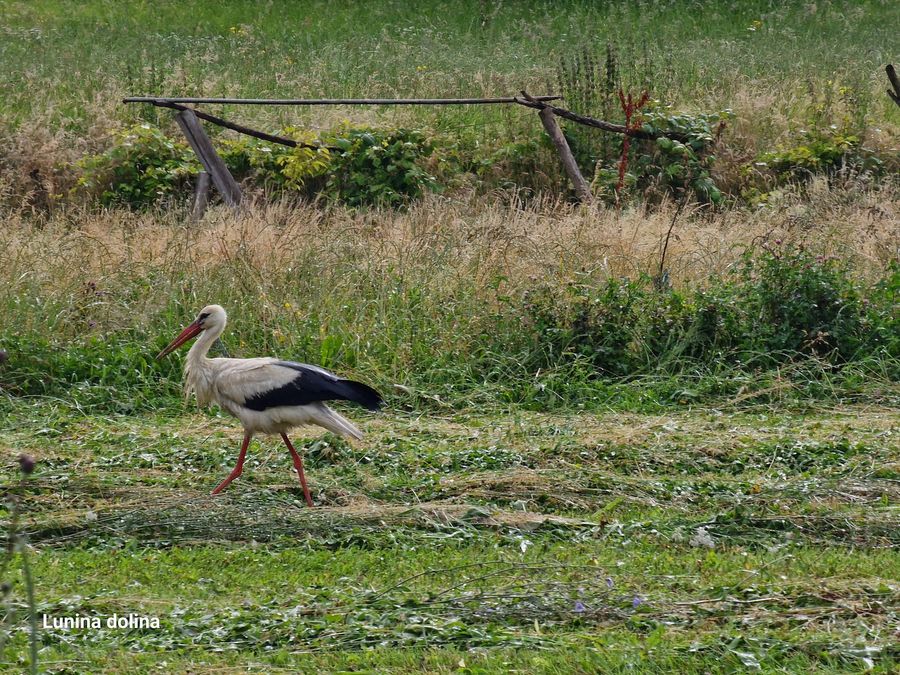
After mowing it comes to the wet meadows to catch frogs, grasshoppers and small rodents.
A night-time hunter of mice and voles — especially welcome in a valley where voles have gnawed young trees.
A small owl with big yellow eyes that hunts around the farm and probably nests here too.
An owl with upright feather "ears" that hunts over open meadows at night.
Its soft purring is a summer sound of the countryside. In Europe it becomes rarer every year.
A small falcon that can hover above the meadow while watching for mice.
It catches insects low over the pasture, where the animals always attract plenty.
A frequent morning visitor. Beautiful — but also the reason we protect young trees.
It hunts rodents, so it is welcome. But because of it we have to shut the hens in well every evening.
At night it rummages through the leaves for beetles, earthworms and slugs.
It loosens and aerates the soil. Molehills are a sign that the soil is alive.
A skilful climber that reminds us whenever the henhouse is not properly closed.
You are most likely to see it on the fresh grass in early spring.
Our largest beetle. Its larvae develop for several years in rotting wood, which is why dead wood in the orchard is precious.
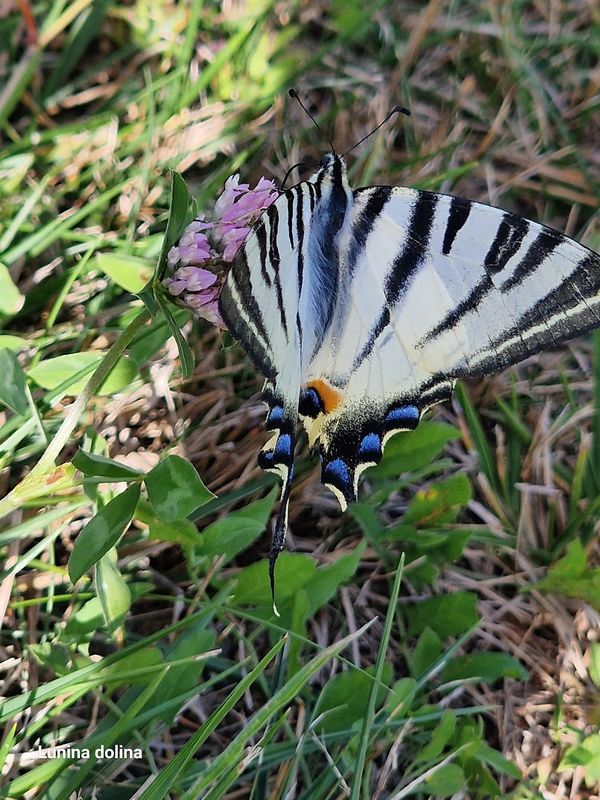
An elegant black-striped butterfly that loves to glide between the fruit trees.
A patient hunter that waits motionless for its prey.
A large, dark violet bee that nests in dry wood and pollinates many a fruit blossom.
When dusk falls, the meadow lights up. Fireflies need darkness and unmown edges.
It builds large mounds of needles and twigs and keeps the forest floor tidy.
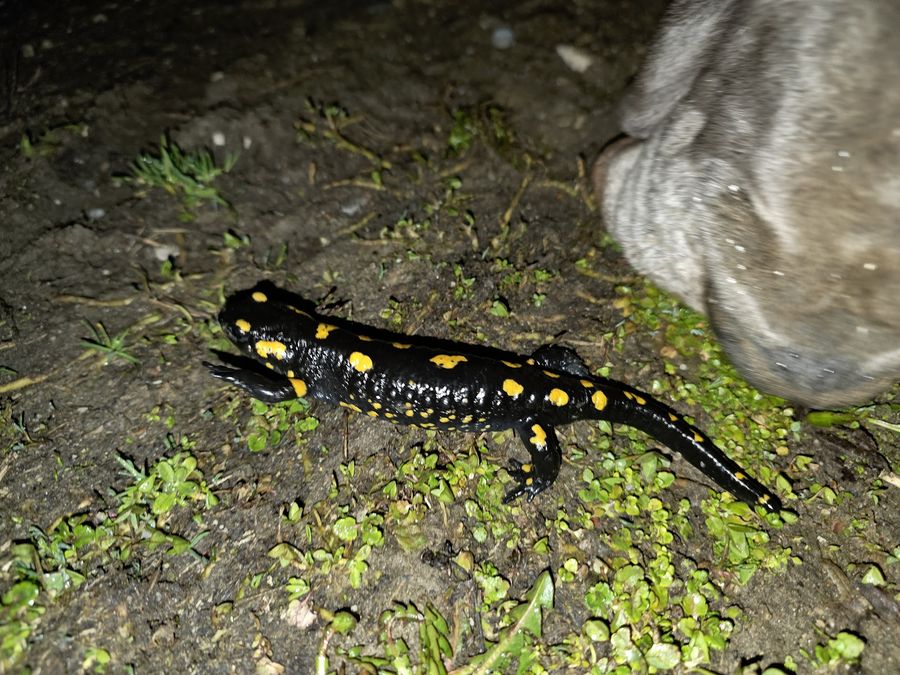
A black-and-yellow amphibian you are most likely to meet after a warm rain.
At night it hunts slugs and insects, and in spring it heads to the water to spawn.
Not a snake but a legless lizard — a quiet hunter of slugs.
A small lizard that likes to bask in the sun at the edge of the meadow.
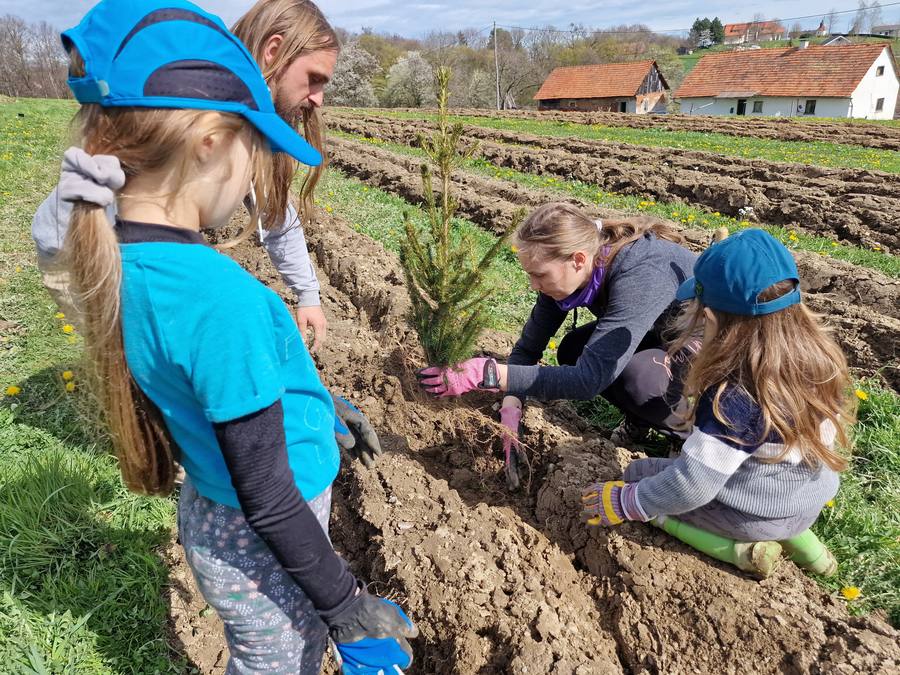
Every tree in the valley has a role: it gives shade, protects the soil, holds water, feeds animals and opens corridors for nature. Together they form a landscape that will outlive us.
Our goal for 2030: 500 trees. You can help with every one of them.
Become a tree sponsor →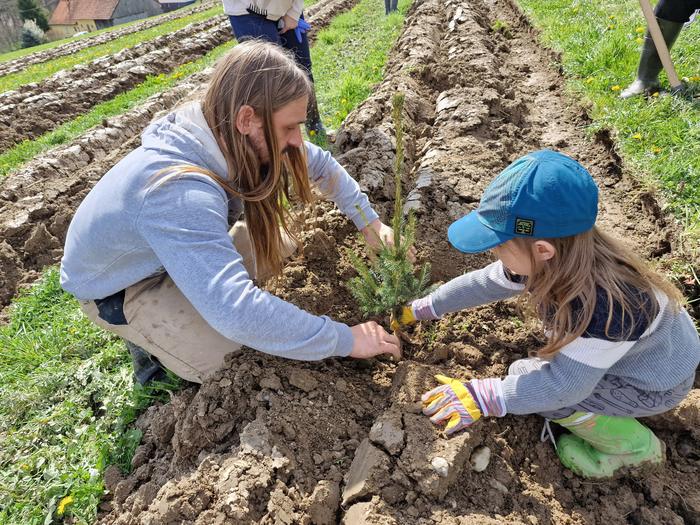
The oak is home to hundreds of insect species, the beech builds forest humus, the bird cherry flowers early for pollinators. The broadleaves have always been at home here; fir and spruce are our newer neighbours.
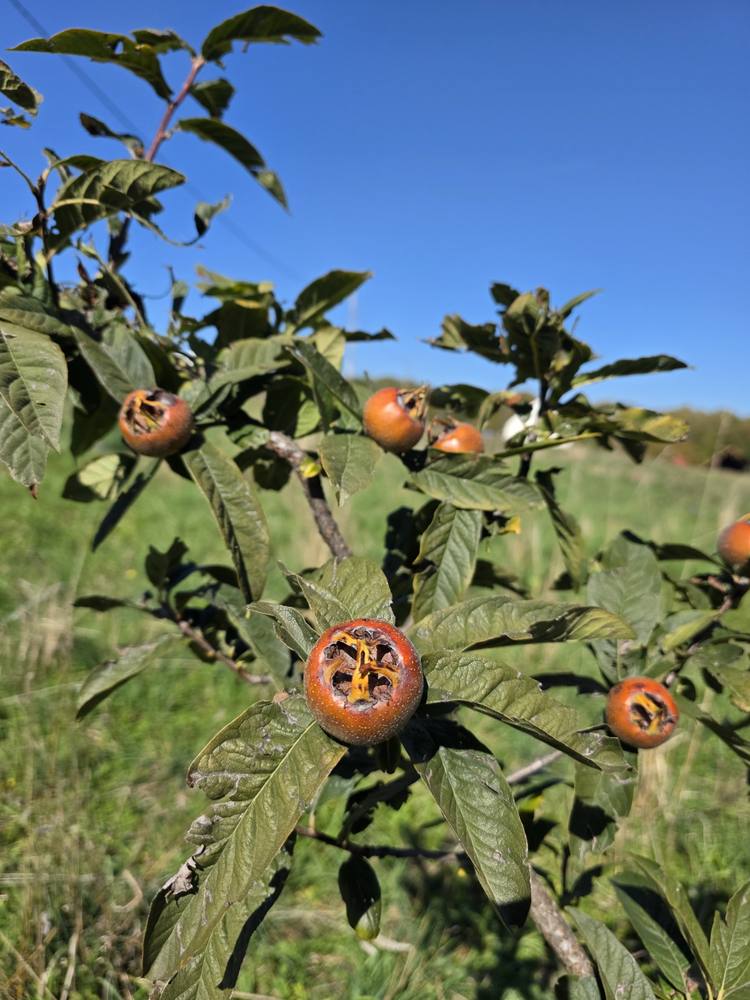
Every fruit tree is a small ecosystem. The blossom feeds bees, the fruit feeds birds and us, and the old trunk feeds stag beetles and owls. An orchard that stands for a long time gives for a long time.
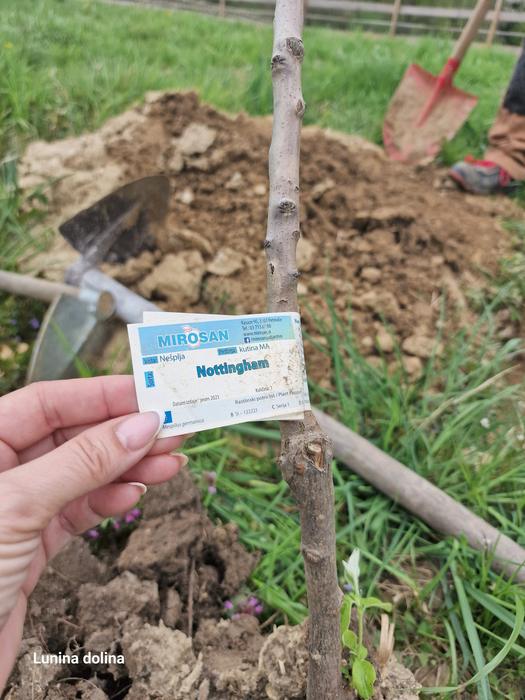
Shrubs hold the whole ecosystem together. Hazel is the first food for bees after winter, elder flowers, fruits and heals, and the cornelian cherry turns the valley red in autumn.
Villagers once gathered under the lime tree. Under it they settled common matters, sang songs and shared bread. In Lunina dolina the lime is not decoration but a centre — a place where people, bees and stories pause.
The poplar takes up a lot of water and helps regulate wet, occasionally flooded ground. Here it grows where the land needs it.
The birch takes root where nothing else will and gradually improves the soil for the trees that follow. It does not wait for an invitation — it simply begins.
Native trees are the backbone of the valley. Alongside them we are planning a small tree garden with trees from other parts of the world: giant sequoia, tulip tree, ginkgo, Japanese maple, sweetgum, Korean fir, red birch and special maples such as Kelly's Gold. We may never see them fully grown — and that is the beauty of it. For beauty, for knowledge and for the curiosity of those who will walk here after us.
Voles gnawed the roots, and roe deer nibbled the shoots and rubbed their antlers against young trunks. We lost some trees and will plant them again. Regenerative farming is not about controlling nature but about learning from it.
The story of the Jungle →The first big planting of 350 trees, and a new planting in 2026. We keep planting — with better protection.
We already have a small pond. A second one is in preparation, as it needs permits.
For owls and bats on the farm buildings, for birds along the edges of the hedgerows and the orchard.
Part of every meadow mown late (after 15 July), with unmown strips left for pollinators.
Piles of branches, wood and stones as hiding places for hedgehogs, lizards, insects and birds.
We would love to work with a beekeeper and to grow flowering meadows and native plants for bees and butterflies.
The survey covered 8.83 ha of the farm's own land; together with leased land the farm covers almost 10 ha. Each habitat type was assessed in the field.
We are looking for biologists, naturalists and nature lovers to help with the ongoing species survey in Lunina dolina. Have you seen or heard something interesting? Write to us.
Lunina dolina is our home and a working farm, so we always arrange visits in advance. That way we can give you our time and attention.
A walk around the farm, meeting the animals and getting to know our way of farming, our tree plantings, pastures and life in nature.
After the guided walk around the farm, we invite you to our table to taste a few simple treats connected with our farm.
The first survey counted more than ten bird species and more than thirteen species of insects and other invertebrates. Among them are the hoopoe, which nests on the farm, the white stork, which feeds on the meadows, the stag beetle, fire salamander, hedgehog, roe deer and fox. We have also heard a barn owl nearby.
Because we work the land gently: grazing instead of ploughing, low intensity, and preserved hedgerows, orchard, stream and wet meadows. Each of these habitats is home to different species, and together they form corridors that animals use to move around.
Almost 10 ha including leased land. The nature conservation survey covered 8.83 ha of the farm's own land, with five different habitats.
Yes, by prior arrangement. On a guided visit we walk through the meadows, along the hedgerows, through the orchard and down to the water. We arrange the date through the contact form.
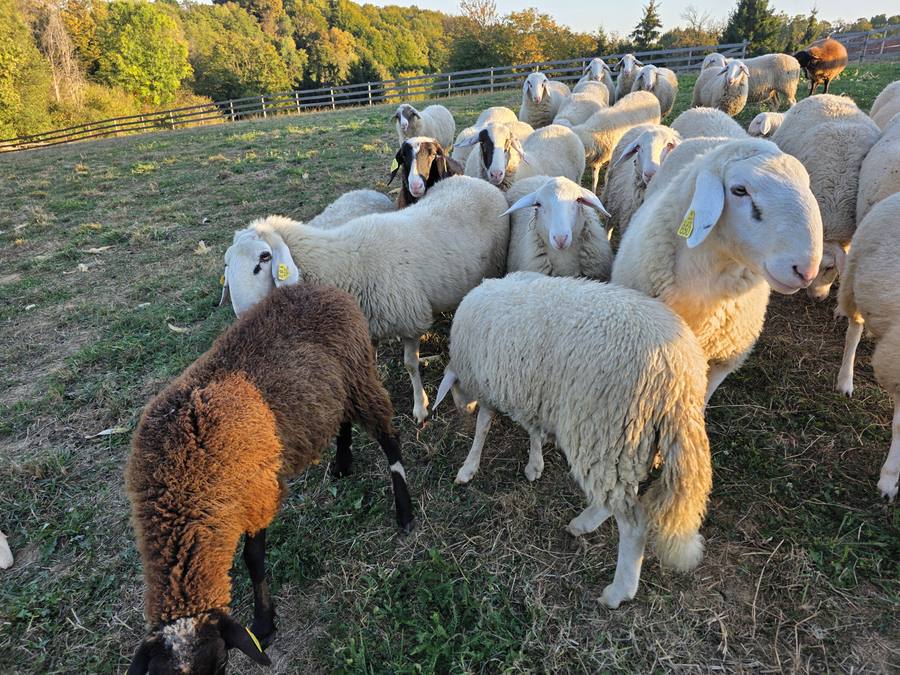 Farm and produce
Our animals, the way we farm, and pasture-raised eggs, microgreens and sheep.
To the farm →
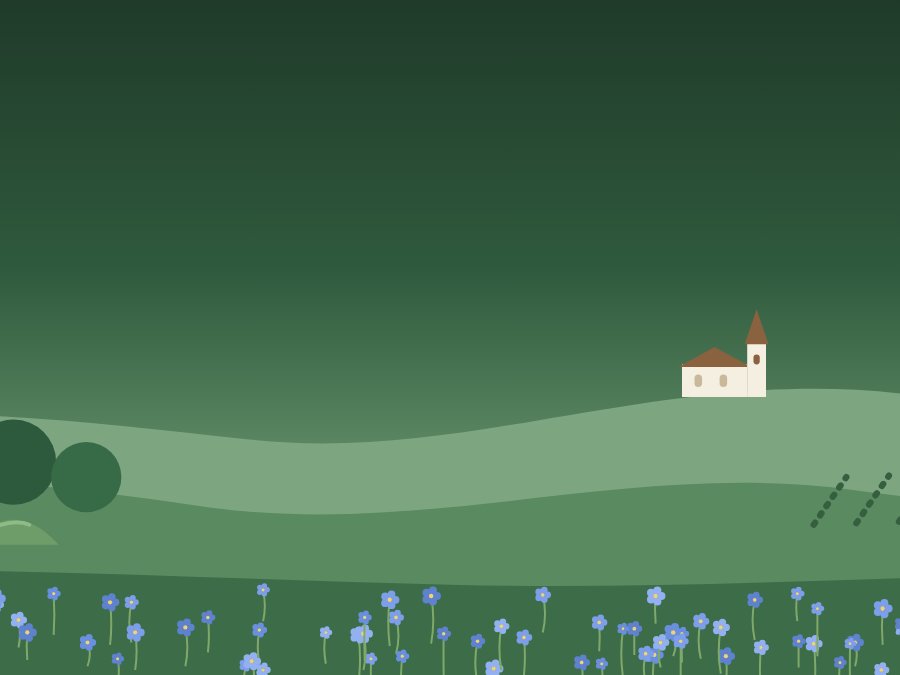 Roots of the valley
Roman burial mounds, flax, wine presses and bricks — stories of the land where Lunina dolina grows.
Explore the heritage →
 Become a tree sponsor
Give a tree that will grow in Lunina dolina — for yourself, a child or someone you love.
Choose a tree →
This site uses Google Analytics to measure visits. By continuing to use the site, you agree to this.