This is not just a farm. It is a living ecosystem.
Lunina dolina is home to creatures you barely meet any more in an intensively farmed landscape. Their presence is no accident — it is the measure of what we are doing right. The species survey was carried out as part of the microcredential Management and Advisory Work in Nature Conservation in Agriculture (Biotechnical Faculty, Ljubljana).
Nine protected species live on the farm or in its immediate surroundings
Each of these species is here because the farm offers the right conditions — no pesticides, an intact landscape structure and nature-friendly practices.
Mammals — the unseen lords of the valley
Walking along the edge of the meadow in the morning, you may spot a roe deer (Capreolus capreolus) with her fawn — calm, unafraid. The night before, a fox (Vulpes vulpes) made its rounds here: natural rodent control without chemicals.
The hedgehog (Erinaceus europaeus) — protected in Slovenia — combs through the leaf litter every autumn. The mole (Talpa europaea) aerates and loosens the soil. The pine marten (Martes martes) reminds us when the barn is not properly closed. The brown hare (Lepus europaeus) — listed as vulnerable on the Red List — runs through the early grass in the rhythm of nature.
Birds — living measures of soil health
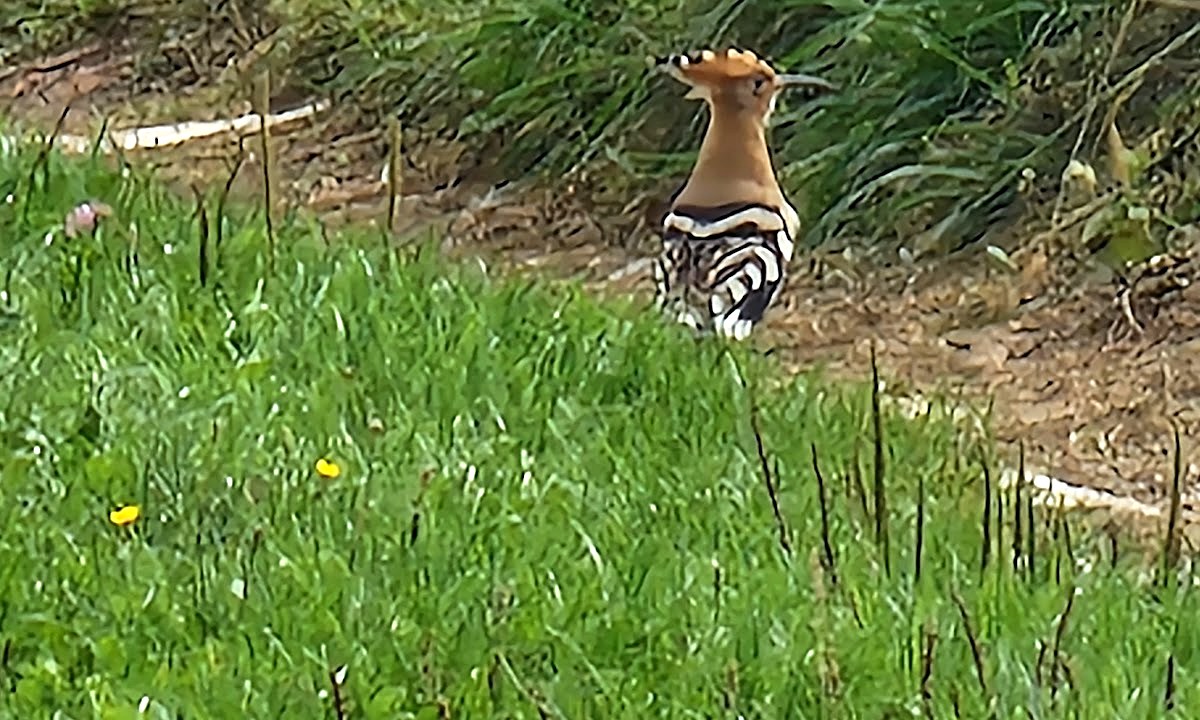
The hoopoe (Upupa epops · Natura 2000 · Birds Directive, Annex I) nests on the farm. It chooses an old tree hollow and a meadow where the beetles are close to the surface. When you hear it, you know: this soil is breathing. The kestrel (Falco tinnunculus) circles above the pasture.
The white stork (Ciconia ciconia · Natura 2000) returns to the wet meadows. The barn swallow (Hirundo rustica) nests on the farm. The boreal owl (Aegolius funereus · Natura 2000) feeds here and probably breeds. The turtle dove (Streptopelia turtur · Natura 2000) — a species in steep decline across the EU — is present nearby.
Insects — the secret builders of the ecosystem
The stag beetle (Lucanus cervus · Natura 2000 · Habitats Directive, Annex II) lives here. When you see a stag beetle, pause — you are looking at a rare creature. The praying mantis (Mantis religiosa) — protected in Slovenia — is a natural regulator of pests.
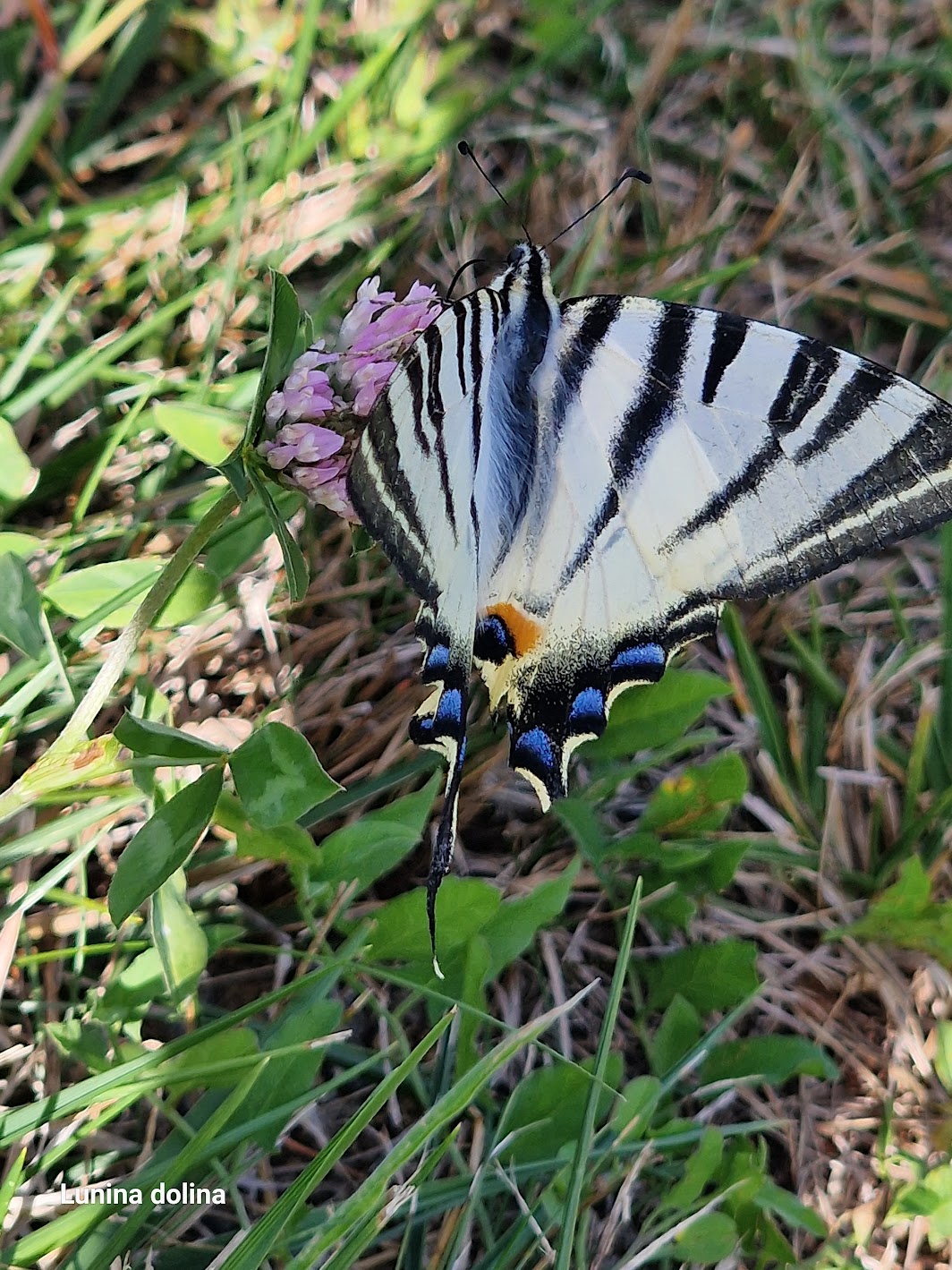
The scarce swallowtail (Iphiclides podalirius) — protected in Slovenia, an indicator of well-preserved woodland edges and orchards. The violet carpenter bee (Xylocopa violacea): a large pollinator of fruit trees. The ivy bee (Colletes hederae): a specialised pollinator of autumn flowers. Fireflies (Lampyridae spp.), red wood ant (Formica rufa · protected in SLO).
Amphibians and reptiles — messengers of clean water
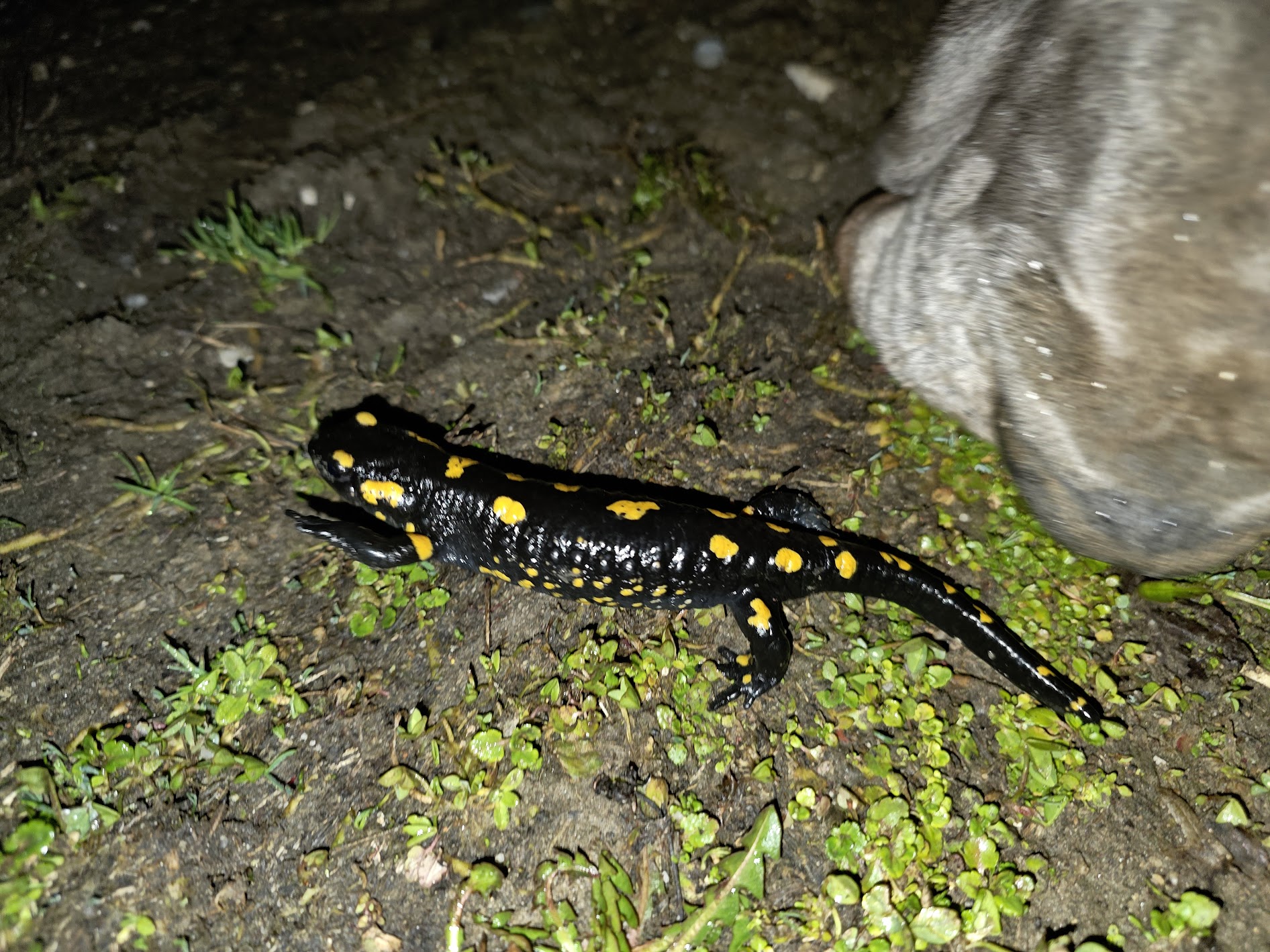
The fire salamander (Salamandra salamandra · Natura 2000) hides under stones by the stream. The common toad (Bufo bufo · Natura 2000) preys on slugs and insects. Where frogs sing, the environment is healthy. That is a fact, not romance.
The common frog — an indicator of the quality of wetlands and woodland edges. The slow worm (Anguis fragilis) — protected under the Decree on Protected Species — is a quiet cleaner of the soil that many mistake for a snake. The viviparous lizard (Zootoca vivipara) — an indicator of the condition of dry and wet habitats.
Five worlds in one valley
Lunina dolina covers 8.83 ha of varied habitats — from mesotrophic to wet meadows, hedgerows, orchards and riparian vegetation. Each habitat was surveyed and assessed in the field.
Mesotrophic to eutrophic meadows
Rotational grazing of sheep and chickens. Species present include yarrow (Achillea millefolium), false oat-grass, red clover and daisy. Conservation value: 2–3. Proposal: mosaic mowing, uncut strips for pollinators, KOPOP measure MET.
Wet mesotrophic meadows
Valerian (Valeriana officinalis) in abundance, moisture-loving grasses, and the presence of amphibians and birds of wet ground. White stork after mowing. Conservation value: 3. Proposal: creation of a pond, late mowing, KOPOP measure VTR.
Traditional standard orchard
Plums, walnuts, wild and cultivated cherries. Combined with grazing — dual use. Old trees with hollows as habitat for the hoopoe, owls and the stag beetle. Proposal: control of ivy, regular rejuvenation pruning, nest boxes.
Hedgerows and solitary trees
Willow, alder, wild cherry, elder, hazel, oak and ash along the woodland edge. They provide shade, retain water and act as corridors for animals. Condition: moderate (3). Proposal: nest boxes for birds and bats, perches for raptors.
Stream, spring and riparian vegetation
Rushes, reeds, willows (Salix spp.), alder (Alnus glutinosa), bulrush (Typha spp.). A spring and a small stream were recorded — a valuable microhabitat diversity. Habitat for amphibians, dragonflies and birds of wet ground. Proposal: an interpretation point, the "marsh corner", and a 3–5 m buffer zone along the water left unmown.
Frequently asked questions
Why do so many species live at Lunina dolina?
The biodiversity of Lunina dolina is no accident — it is the result of deliberate choices: rotational grazing that does not exhaust the soil, low farming intensity that leaves room for nature, and natural structures (hedgerows, orchard, stream, wet meadows) that form corridors for animals. The presence of nine Natura 2000 species is official confirmation that the regenerative approach works.
Which protected (Natura 2000) species live at Lunina dolina?
Nine species: hoopoe, white stork, boreal owl, long-eared owl, turtle dove, another owl species, stag beetle, common toad and fire salamander. The survey was carried out as part of a microcredential of the Biotechnical Faculty, Ljubljana.
How many habitat types does the farm have?
Five habitat types across 8.83 ha: mesotrophic to eutrophic meadows, wet mesotrophic meadows, a traditional standard orchard, hedgerows and solitary trees, and a stream with a spring and riparian vegetation.
Can visitors see the biodiversity of Lunina dolina?
Yes — guided walks through the habitats, the "Nature for children" programme and early morning observations at sunrise are all available. Arrange your visit through the contact page.
What we are planning next
Nest boxes
Owls and bats on the farm buildings. Pollinators and starlings along the edges of hedgerows and orchards. Swallows by the water trough.
A new pond
In the wet part of the meadow, where water already gathers naturally. Essential for amphibians, pollinators and for cooling the microclimate.
Mosaic mowing
Late mowing (after 15 July) on parts of every meadow. Uncut strips for pollinators. Reduced intensity along the edges.
Beekeeper and pollinators
In future we would like to work with a beekeeper and to set up hives and pollinator habitats. Flowering meadows, fruit trees and native plant species create a place where bees, butterflies and other pollinators find a home again.
Natural shelters for animals
A pile of branches, wood and stones will create natural hiding places for hedgehogs, lizards, insects and birds. Even small elements play a large role in a healthy ecosystem.
Trees among the meadows
Trees are not separate from the farm — they are part of it. They give shade to animals, retain water, enrich the soil and create space for many species.
Community and collaboration
We believe regeneration is not the work of one person. That is why we want to connect families, children, local makers, beekeepers, conservationists and everyone who believes in a more living relationship with nature.
When you visit Lunina dolina, you step into a living world
At Lunina dolina you do not watch nature through a window — you step into it. You hear the hoopoe. You see the stag beetle on a trunk. You count butterflies in the meadow. You watch the scarce swallowtail — a protected butterfly — flying among the fruit trees. That experience stays with you.
Guided biodiversity walk
A circuit through the habitats of Lunina dolina — meadows, hedgerows, orchard, stream. You get to know the species that live here and understand why they are here. For couples, individuals and small groups.
Nature for children
Children search for insects, listen to birds and watch frogs by the stream. Hands-on, muddy, alive. No PowerPoint — just a real encounter with nature.
Early morning with nature
An hour of silence at sunrise. With a coffee in hand you watch roe deer in the meadow, listen to the dawn chorus and wait for the hoopoe to leave its nest. For those who know how to wait — and are rewarded every time.
Become part of this story
We are looking for biologists, naturalists and nature lovers who would help with the ongoing biodiversity survey of Lunina dolina. Or simply come and visit. Nature is open. Always.